Three Fruits
Fruit One: The Low Hum of Presence
Consider a time you felt purposeful, calm, and complete. How did that feel in your body? Did the belly relax, did the chest expand, did the shoulders drop, did the jaw loosen?
The Tree:
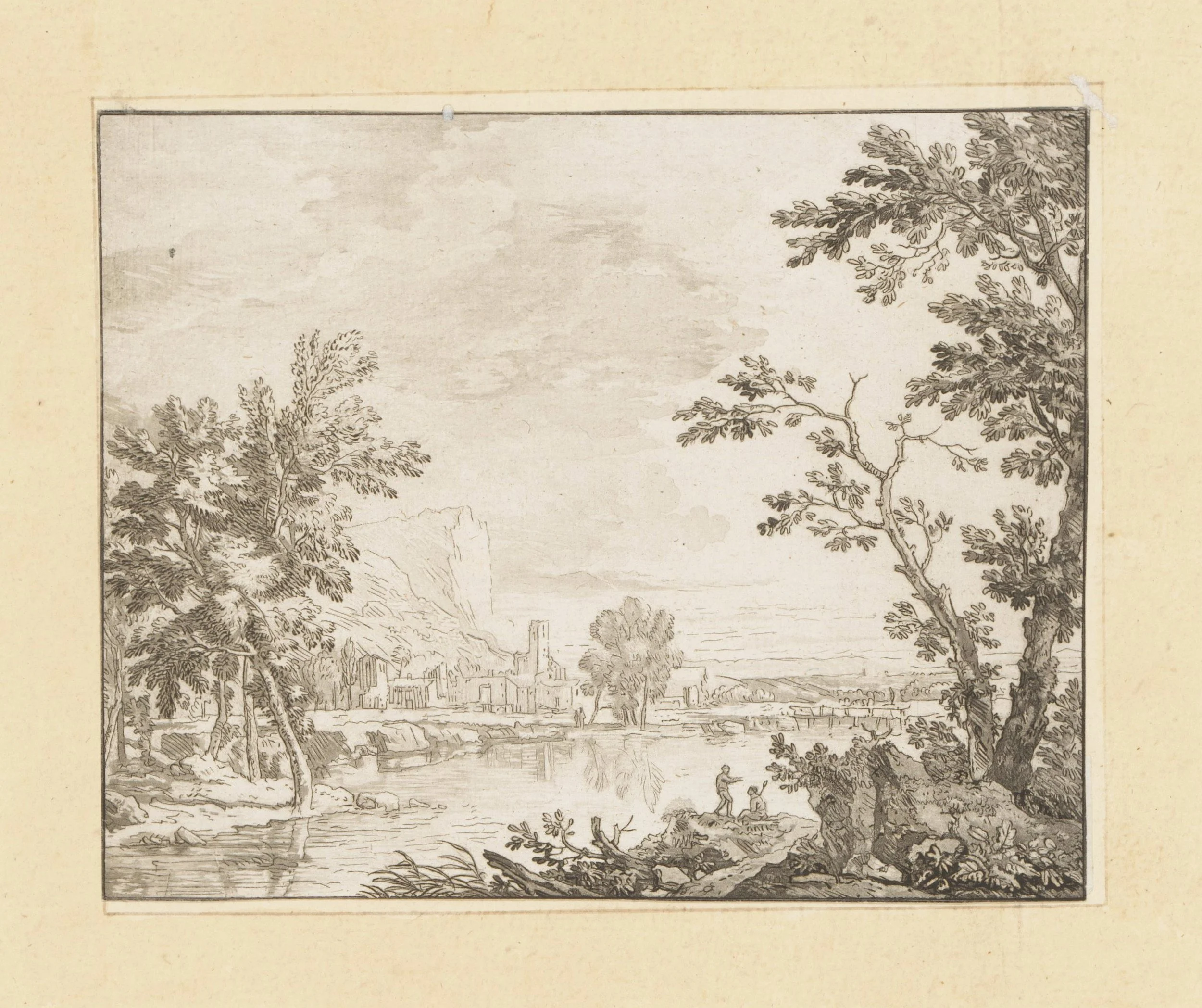
Recently, one of my guides designed a dream lesson for me.[1] In the dream, I visited a house in a riverside town. Its owner greeted me with warmth but told me to explore on my own because she was busy finishing its renovation. The house had a simple, functional luxury; its beauty was a consequence of its indoor-outdoor usefulness and its lines and materials were noble. The back opened outwards to an enormous space, some of it already gardened for food or flowers and the rest comprised of fresh soil awaiting seeds. About four or five others chatted or gardened. Neighbors, they had combined their backyards into a communal space. Everyone and everything in this riverside town emitted the same tone: calm, spacious, and complete within themselves. Theirs was not the vacant, avoidant “bliss” portrayed in films like Midsommar and Wicker Man, but a grounded presence with emotions acknowledged and either transmuted or observed with detachment, rather than suppressed or quicksand-like.
When I returned to my parked car, I saw that it had been “eaten” by a car driven by a chaotic driver. I was officially on the other side of the river, which filled with scenes of people who were anxious, harried, and distracted. This city metonymizes our modern world. As a participant in the dream, I’d find myself fighting for something only to realize that what I and others wanted was filthy and breaking down. In one such scene, someone wanted to impress me by vigorously cleaning the floor of an apartment, but the floor was a tile linoleum I found hideous and the place reeked of mildew. I thought: “This is nice of you and all, but I don’t even want to be here.”
Within these and other chaotic scenes, I discerned one or two others who were very still, not necessarily in the sense of not moving, but because they were very present. We recognized each other by a low vibratory hum that was inaudible to anyone who could not also be in that metaphorical stillness. Everyone on the other side of the river—the calm side—also vibrated with this low, deeply comforting hum. The other side of the river—with its still-in-construction but beautiful floors and walls and gardens—was accessible to anyone who could stop long enough to feel, desire, and cultivate this hum.
[1] This guide introduced himself to me as Maitri, an aspect of Maitreya. We spoke in a rose-opal hall with columns and fountains, adjacent to a saffron realm of seated Buddhas.
Image: Maria Catharina Prestel, Jan van Huysum, River Landscape, 1783
Fruit Two: The Union Poppy
Do you have a knowing that sits both in your body and your intellectual mind? An understanding that you can both conceptualize and feel in your bones?
Or: is there something you understand intellectually but not in your body? For instance, perhaps you intellectually know that falling in love exists, but you are not sure whether you have experienced it. Or perhaps you conceptually know that systemic racism exists, but you do not know what it is like, in your flesh, to experience it.
Conversely: is there anything that you feel in your body but cannot conceptualize? Perhaps there is something you know in your gut or heart, but cannot bring to words for whatever reason: shame, guilt, cultural taboo, or compartmentalization.
The Tree:
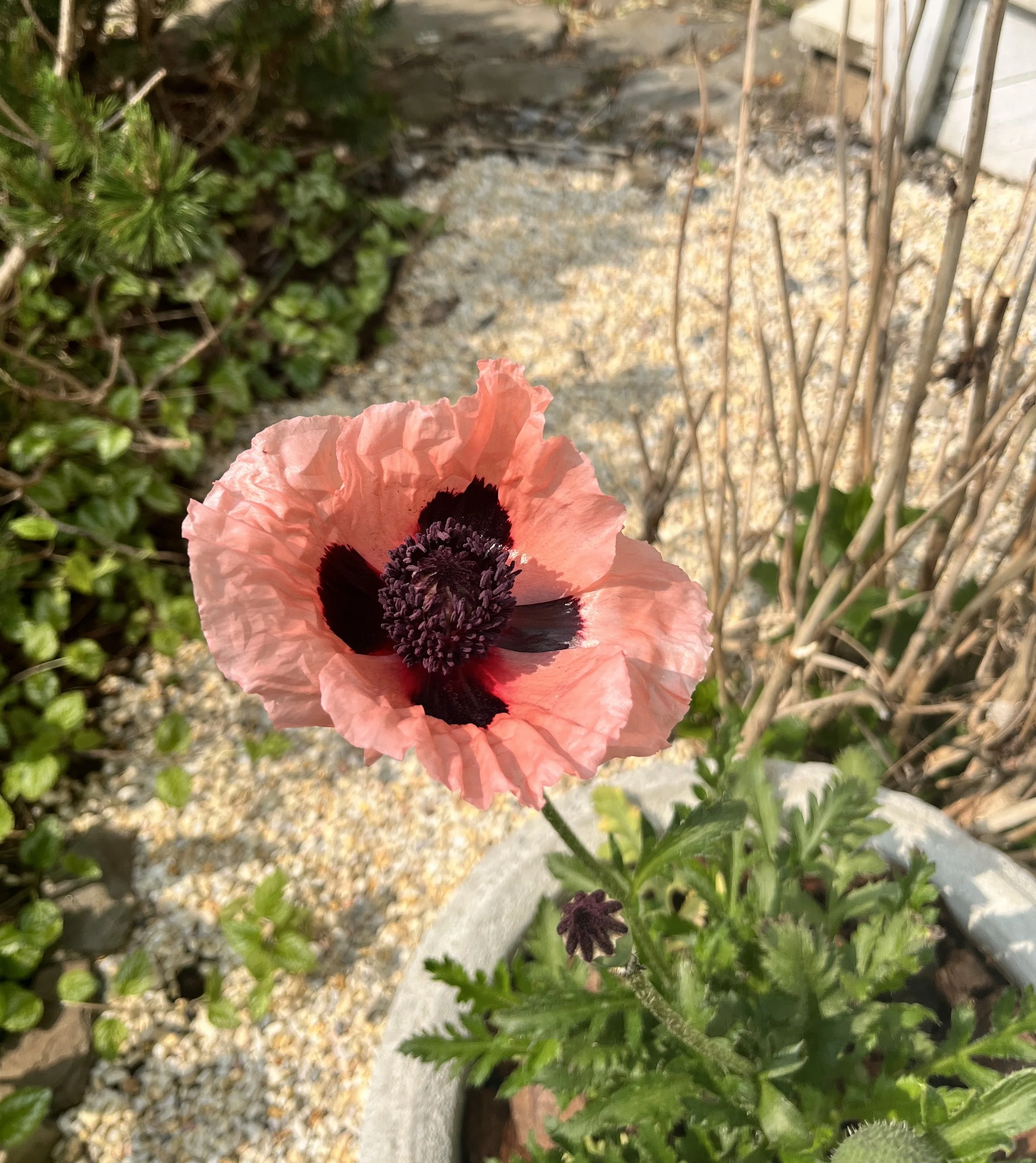
In the garden of the dream above, I saw a peach-pink poppy with a dark purple center. A woman told me that its name was the “union poppy.” That is not the actual name of the poppy in our world, but I recognized this as a wink from my guide, who, after all, had designed the dream. When the dream felt complete, I awoke with great excitement because its symbolism was so clear that I could recite to my guide what I believed had been its lessons. He clarified one I’d missed: the poppy’s soft rose color represented heart-led love and joy and the amethyst-indigo represented wisdom and knowledge (these are corresponding chakra colors). Both must marry each other for a person to reach a state of calm fullness, with heart-led knowing the greater form of knowing around which the intellectual mind sits like helpful tool. Hence: union poppy.
Image: “Union” poppy in my Connecticut garden, 2023
Fruit Three: Sandbox Dreams
Do you know what dreams are for?
The Tree:
There are many kinds of dreams and describing them is a task I will undertake in another writing.
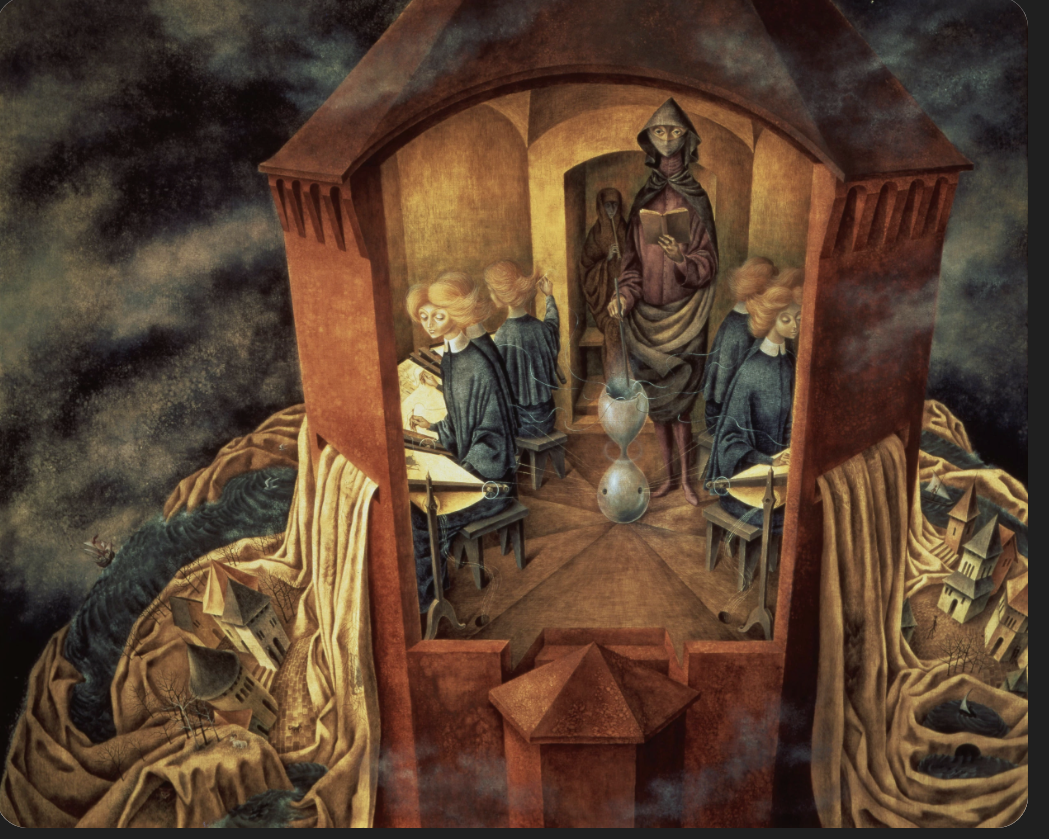
The type of the dream above can be described as a sandbox dream, which helps us rehearse a likely potential circumstance or to simulate a lesson in a compressed form. If your lived actions and choices point toward a potential outcome, your guides and your higher self (or, if it makes you more comfortable, your subconscious) design a sandbox dream.
How does this work? The dream—whether you remember it or not—imprints lessons that you experience in your body within the rehearsal and certain actions and even desires begin to carry this imprint. Suddenly: you are certain that you desire or reject something, you feel more comfortable around someone, or an ambivalent feeling becomes resoundingly clear—all without having to recall the sandbox dream that brought you this newfound embodied clarity.
Though they influence our waking experience regardless, becoming attentive to dreams helps us move some of the vast subconscious towards conscious knowing. In so doing, we get closer to the calm, spacious low hum of the riverside town and away from the harried, unconscious loops of the grimy city.
Image: Remedios Varo, Bordando el manto terrestre, 1961
First uploaded July 19, 2026.