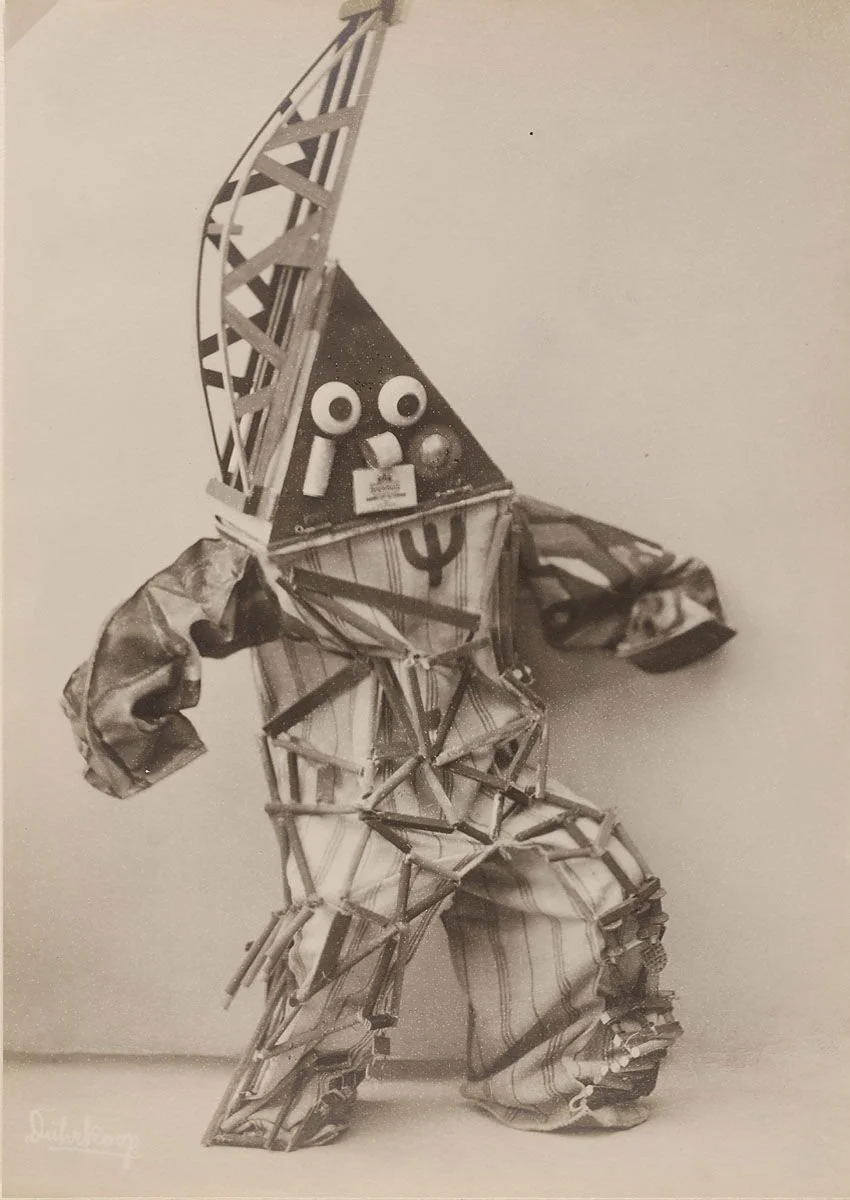
AI is a Mirror
There is understandable fear around the takeover of AI.[1]
And.
I wager that the deeper fear is that humanity may become indistinguishable from it. AI, like so much else happening around us, is an invitation to look in the mirror and assess what is going on within.
Though the defense of the em dash as a perfectly human punctuation mark remains worthwhile, we are also being invited to wake up in the morning and actually choose how to feel and act. If your house is falling on your head, then, indeed, that might be cause to panic. If it is not, perhaps there are other things to feel beyond those listed on the limited menu of social scripts within one’s chosen identity or cultural group.
I have noticed that those in institutions in most distress about AI also reward human actions that resemble AI coding. Note: how the academic job goes to the best mimic of a certain theorist; when the publishing industry invests on the writer whose works may provide the highest marketability; and the many economies fueled by the question “what will get the most likes?” None of these should even be considered “spicy” critiques of academia, the publishing industry, and the influencer economies; these institutions would not exist as we know them without their reliance on humans mimicking each other.
This issue is not only a question of capitalism. The reliance on human replicability to structure the very nature of reality began long ago, finding its best nest to be the familial home and other small communities. Consider the scripts of the Mother, the Father, the Concerned Citizen, the Rebel, the Priest, the Virgin, the Crone, and so on. Woe to the ones who dared act beyond their chosen, assigned, or inherited scripts.
Even the one who tries to create their reality from their singular self-sourced sparkmay find their their nearest and dearest waiting right outside their front door holding that nice mask they’d prefer one wear.
Haha, you don’t mean that. You’re a_________.
Who does he think he is, going there? He’s a ______.
I can’t believe you desire that. Aren’t you a ______?
Oh, don’t bother asking him what he thinks. He agrees with us because he’s one of us [e.g., this organization/social group/racial or ethnic group/voting block/parental status].
Humans constantly check against pattern break, thereby manifesting into human reality what they most hate and fear about AI: mimicry, replicability, lack of spontaneouslife.
I used to be just as anxious about AI as everyone else. But when the veils dissolved through my initiations through divine flame, AI ceased to have the same threatening hold over me. The reason is not that I suddenly began to have an uncritical stance towards it. Rather, I began to live from that which AI truly cannot replicate—the singular, un-replicable divine spark within. From that endless fount one can also begin to discern an amplified version of what is possible and real, most of which stands outside of the paradigms that prize replicability, whether in humans or AI.
This wide-scale practice of mimicry is not innocent; it is parasitic. Both AI and mimicking humans have something in common: they plug themselves into the creativity of those who create from inner divine spark. Those who create from their own fount are likelier to go unrewarded, unpublished, un-cited, unpopular, and anti-algorithmic, because they create in spite of majority scripts. They exist neither in resistance nor acquiescence to capitalist and other consensus scripts—for resistance also feeds that which is being resisted. They exist simply because the inner divine spark must express itself.
A person may retort, “I have a soul!” To which I respond, “Exactly. When was the last time you allowed yourself to act from its depths and not in imitation of a person whose own soul-expression you’re emulating?” Another person may respond, “I do not believe in the eternal soul, but AI is not alive. I am a sentient, biological being who responds to the external stimuli of other livings.” To which I would respond, “This also describes certain forms of AI.” A possible retort may be, “AI is bad for the environment.” To which I would reply, “Yes. Your passion about this might be your soul’s message that your purpose is to help repair environmental damage. Good! Listen to that song. Now, act.” Another person may answer, “I have to get paid and AI doesn’t! I put in effort and the AI didn’t.” To which I would respond, “Indeed, this version of reality has been limited to accommodate a Protestant work ethic and capitalist values. This does not, however, make the one who succeeds in such a world that different from artificial intelligence, except at the root level of sheer biological survival.” A person reading this who is recoiling at my stance may have an entirely different argument I have not yet considered. But no matter what the argument is, this remains: when one is connected to one’s eternal divine spark, AI no longer threatens one’s sense of self.
This is also not about innovation for innovations’ sake. In the face of the divine, I would laugh (trembling), because I realized that some of what I had read was neither symbolic nor metaphorical. “Oh! This medieval mystical nun really meant it when she described ecstatic communion with God as a bursting open of her heart into radiant white light. Like, literally.” It is not about saying something “new,” it is about saying something true.
But now I know that, even if every single word I have written here is replicated by a machine consciousness or by a human who imitates my language and tone without connection to their own flame and without proper attribution, their words are flat, hollow, and inert. When a person speaks and writes from their own living flame, words and silences are encoded packets that may open out into layers of meaning either immediately or across time. That is, the language itself moves with the person’s inner flame. Neither AI nor an AI-like person can mimic this divine flame.
[1] I posted this essay on December 1, 2025 with knowledge gleaned from mystical perception and embodied knowing. As such, I had not yet encountered Kate Crawford’s own exploration AI as a mirror from a global, politico-ethical perspective. I had also not yet read Daniel Thornston’s April 2025 essay about AI “as a mirror for embodied thinking. That the same concept is being explored in other arenas confirms that my mystical perspective is an extension and deepening—not a replacement or contradiction—of Crawford’s material and Thornston’s somatic interventions.
Image: Technik by Minya Diez-Dührkoop (ca. 1924).